


The Quick Version
- A remembrance week for the 120th anniversary of the 1906 Atlanta Race Massacre runs September 20 to 26, and most events are free.
- Free events include a worship service with Ambassador Andrew Young, a tour at South-View Cemetery, a panel on Fulton County’s reparations Harm Report and a history exhibit at the APEX Museum.
- A three day mini-conference from September 24 to 26 requires registration, and the organizers say space is limited.
- Not in Atlanta? You can give to the week’s crowdfunding campaign or study the history through the lessons and records linked below.
Over four days beginning on September 22, 1906, white mobs moved through Atlanta killing Black residents and attacking Black businesses and streetcars. The 1906 Atlanta Race Massacre left somewhere between 25 and 40 Black people dead, according to the New Georgia Encyclopedia’s history of the massacre, and for decades white Atlanta largely forgot it, minimized it and left it out of the official story of the city. This month marks 120 years, and the Coalition to Remember the 1906 Atlanta Race Massacre has published a full week of events for September 20 to 26.
The coalition’s theme is “Truth, Reconciliation, and Action,” and that last word is why this anniversary deserves more than a moment of silence. Here is what happened, why it still matters, and how to take part from anywhere.
What Happened in Atlanta in September 1906
The violence was built on a lie. On the afternoon of Saturday, September 22, Atlanta newspapers reported four alleged assaults on white women by Black men. None of them was ever substantiated. The coalition points out that two of the papers that fed the panic survive today as The Atlanta Journal-Constitution.
Politics poured fuel on it. The 1906 governor’s race pitted Hoke Smith against Clark Howell in a campaign soaked in racial rhetoric, with Smith insisting that Black men had to be stripped of the vote to keep them “in their place.” By early evening on September 22, a crowd downtown had become a mob that surged along Decatur Street, Pryor Street and Central Avenue until after midnight. Militia and police did not break it up until around 2 a.m.
Two days later, on September 24, the violence reached Brownsville, a Black community about two miles south of downtown that was home to Clark College and Gammon Theological Seminary. Armed Black residents had gathered there. A police raid led to a shootout that killed an officer, and more than 250 Black men were arrested.
The official record was built to forget: the city coroner issued only ten death certificates for Black victims. Capital B Atlanta’s reporting on the victims names people like 18 year old Frank Smith and describes how Alonzo Herndon’s barbershop on Peachtree Street was ransacked. The coalition says 16 victims have now been identified by name and nine remain unnamed. That work is still going: in 2023, researchers used Fulton County death records to confirm two more victims, including a 13 year old boy named Marshall Carter, as Axios Atlanta reported.
Why the 1906 Atlanta Race Massacre Still Matters
This was not a single bad weekend that faded. According to the New Georgia Encyclopedia, the massacre helped bring about statewide restrictions on Black voting in Georgia by 1908. It also changed Black leadership. A young Walter White lived through the attacks as a boy, a defining moment for a man who went on to become secretary of the NAACP. He described it decades later in his 1948 memoir A Man Called White. For many Black leaders, the massacre discredited Booker T. Washington’s accommodationist strategy and gave new legitimacy to the more aggressive push for justice associated with W.E.B. Du Bois, who wrote the poem “The Litany of Atlanta” in its wake.
The massacre also sits inside a present day conversation about repair. In April 2026, the Fulton County Reparations Task Force released a 615 page Harm Report documenting what slavery and the Jim Crow era took from Black residents, and the county commission adopted it, according to WABE’s coverage of the report. A second phase will produce a “Repair Report” on what repair could look like. The task force chair, Dr. Karcheik Sims-Alvarado, is on the panel during this month’s remembrance week. Atlanta is a live example of BCN’s argument that reparations efforts are gaining ground locally.
The 120th Anniversary Week, Day by Day
Here is the schedule as posted on the Coalition to Remember the 1906 Atlanta Race Massacre’s remembrance site. Confirm times there before you go.
Sunday, September 20: Worship, Procession and Remembrance
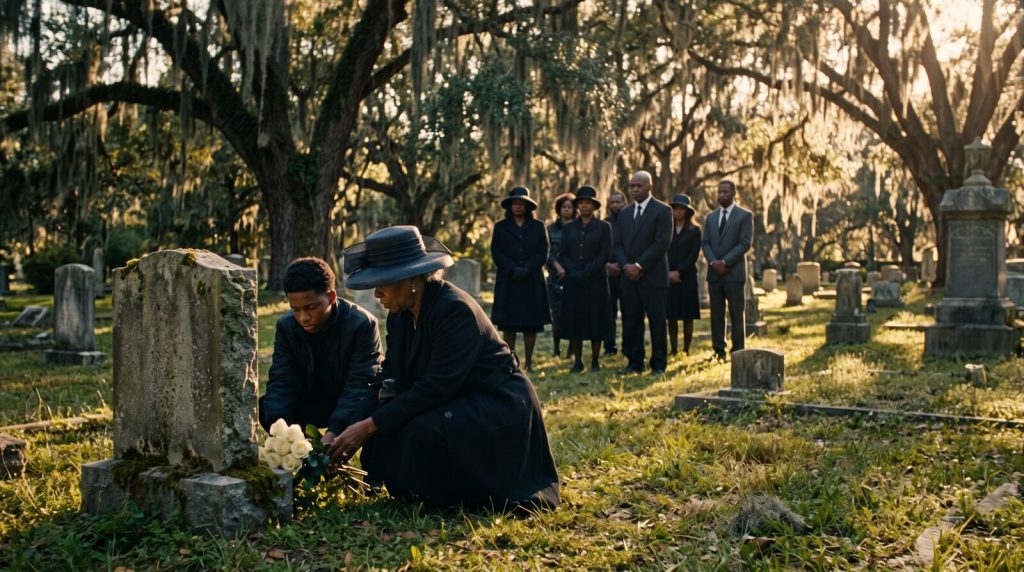
The week opens at 11 a.m. with a Truth and Reconciliation Worship Service at First Congregational Church, 105 Courtland Street NE, with Ambassador Andrew Young, who is serving as honorary chair. At 2 p.m., a car processional leaves the church for South-View Cemetery, 1990 Jonesboro Road SE, for a tour and remembrance from 3 to 5 p.m. The day closes at 5 p.m. with The Praise House Experience across the road from the cemetery. All of it is free.
Monday, September 21: The Harm Report Panel
From 5 to 7:30 p.m., the Auburn Avenue Research Library, 101 Auburn Avenue NE, hosts a free panel on the Fulton County Reparations Harm Report with Dr. Clarissa Myrick-Harris White, Dr. Karcheik Sims-Alvarado and Ann Hill-Bond.
Tuesday, September 22: Exhibit Opening at the APEX Museum
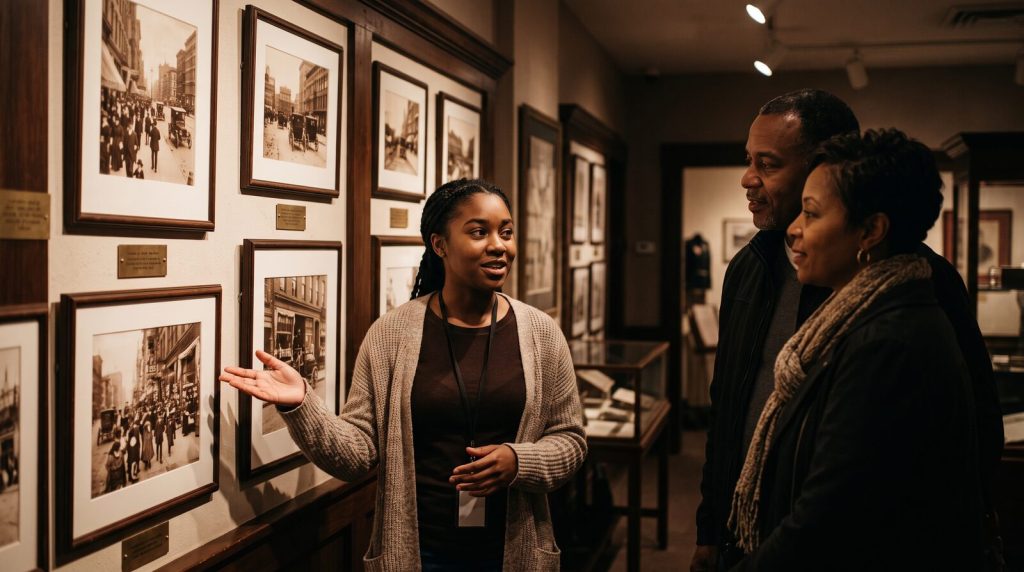
On the 120th anniversary of the night the violence began, the APEX Museum, 135 Auburn Avenue NE, opens a 1906 history exhibit with a reception and timeline presentation from 6 to 8 p.m. The exhibit stays up through September 26, staffed by HBCU student docents. Admission is free, with a suggested donation.
Thursday to Saturday, September 24 to 26: The Mini-Conference
The final three days take place at All Saints’ Episcopal Church, 634 West Peachtree Street NW. Thursday evening brings the premiere of the film Never Again: The 1906 Atlanta Race Massacre and a town hall. Friday evening is a Special Equitable Dinner with partner Out of Hand Theater. Saturday runs from 9 a.m. to 3 p.m. with a Truth, Reconciliation and Action workshop that ends in a call to action. One registration covers all three days.
How to Take Part, Wherever You Live
If You Can Get to Atlanta
Start with the free events from Sunday through Tuesday. If you want the film, dinner and workshop, register early through the coalition’s site, because seating is limited. Families with older children might start at the APEX exhibit, where HBCU students guide visitors.
If You Want to Give Time or Money
The coalition’s crowdfunding campaign runs September 20 to 26. Volunteers are needed for ushering and event support at every major event, and the volunteer shift list routes sign ups through Hands On Atlanta.
If You Want to Learn It Properly
The National Center for Civil and Human Rights offers lesson plans and primary sources on 1906, including local and international newspaper coverage from the time. Teachers, homeschool parents and church ministries can use them as is, and they pair well with the conversation BCN raised around the Black History Month centennial: history is something you practice, not just something you observe in February.
If You Want to Bring It Home
Atlanta is not the only city with a buried chapter. Ask your local library, historical society or church archive what happened in your own town.
One hundred twenty years ago, Atlanta’s newspapers told a false story about Black people, and the city paid for it in blood and decades of silence. This month, churches, museums, scholars and neighbors are telling the true story in public, with the door open. Show up if you can, give if you can’t, and learn the names either way.