

The Quick Version
- Studies show Black adults have higher rates of obstructive sleep apnea than white adults, yet are less likely to be diagnosed or treated for it.
- Sleep apnea raises the risk of high blood pressure, stroke, and heart disease, three conditions that already hit Black communities harder.
- A screening tool called STOP BANG, plus a home sleep test ordered through your doctor, can often replace an overnight sleep lab visit.
- Insurance and access gaps remain real barriers, but community health centers and telehealth sleep programs are closing some of that gap.
Loud snoring gets treated as a punchline more often than a warning sign, but for millions of Black adults, it is one of the clearest signals of a treatable condition that is quietly raising their risk for stroke and heart disease.
A Higher Burden, a Lower Diagnosis Rate
Research published in the Annals of the American Thoracic Society and elsewhere has found that Black adults have higher rates of obstructive sleep apnea than white adults, and tend to develop more severe cases at a given weight or age. At the same time, Black patients are less likely to be referred for a sleep study, less likely to receive a diagnosis, and, once diagnosed, less likely to be prescribed or to keep using a CPAP machine, the standard treatment. Researchers point to a mix of causes: unequal access to sleep specialists, symptoms that get attributed to other things, and cost barriers around both testing and treatment equipment.
Why It Matters Beyond Feeling Tired
Untreated sleep apnea does more than wreck your energy. It repeatedly drops the oxygen in your blood while you sleep, which strains your heart and blood vessels over time. It is linked to higher rates of high blood pressure, irregular heartbeat, stroke, and type 2 diabetes, all conditions that already affect Black adults at higher rates. Treating sleep apnea does not erase those risks by itself, but leaving it untreated adds another layer of strain on top of them.
Signs Worth Taking Seriously
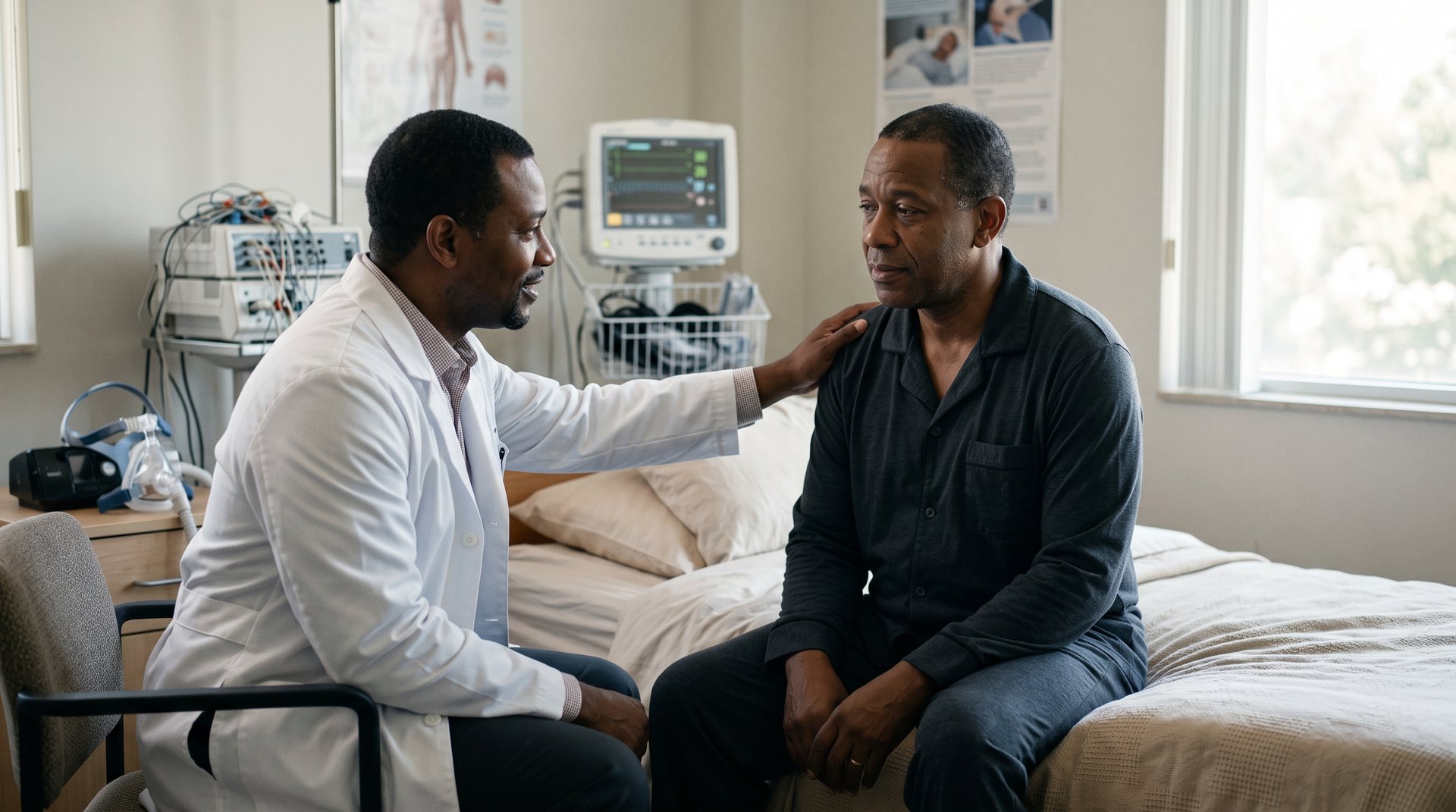
Loud, chronic snoring is the most recognized symptom, but it is not the only one. Waking up gasping or choking, morning headaches, daytime sleepiness that does not improve with more sleep, and a partner reporting pauses in your breathing overnight are all reasons to bring it up with a doctor. Sleep apnea also shows up differently in women, sometimes as insomnia or fatigue rather than obvious snoring, which contributes to it being missed.
Getting Tested Without a Full Sleep Lab Visit
A quick way to gauge your risk is the STOP BANG questionnaire, an eight question screening tool doctors use that covers snoring, tiredness, observed breathing pauses, blood pressure, body mass index, age, neck size, and gender. A high score is not a diagnosis, but it is a strong reason to ask for a formal test. Many doctors can now order a home sleep apnea test, a small device you wear overnight at home, which is often cheaper and more accessible than an in lab sleep study and works well for diagnosing moderate to severe cases.
What the Research Still Gets Wrong
Some of the tools used to score sleep studies, including certain measures of airway collapse, were developed and validated on study populations that were not diverse, which may affect how accurately they capture symptoms in Black patients, particularly Black women. That is an active area of research, not a settled one, and it is a reasonable thing to raise with a sleep specialist if your test results do not match how you actually feel.
Your Next Step
If snoring, exhaustion, or a partner’s concern has been nagging at you, ask your primary care doctor for a STOP BANG screening and a home sleep test referral. Community health centers increasingly offer sleep medicine through telehealth, which can cut down on the wait to see a specialist. The American Academy of Sleep Medicine keeps a directory of accredited sleep centers at sleepeducation.org, and many CPAP suppliers offer payment plans for patients without full insurance coverage. Better sleep is not a luxury here. For a lot of Black adults, it is a direct line to lowering stroke and heart disease risk.