
The Quick Version
- If you know a young Black man starting college or stuck partway through, help him find a coaching, mentoring or male initiative program this fall. We list where to start below.
- HBCUs including Benedict College and Howard University are building dedicated support systems as Black male enrollment keeps sliding, Capital B News reported on September 8.
- Black male undergraduate enrollment fell about 22 percent nationally from 2010 to 2022, and 25 percent at HBCUs, according to the American Institute for Boys and Men.
- College is not the only good path, but the choice should be real. Men who start and stop out often carry costs without most of the degree’s payoff.
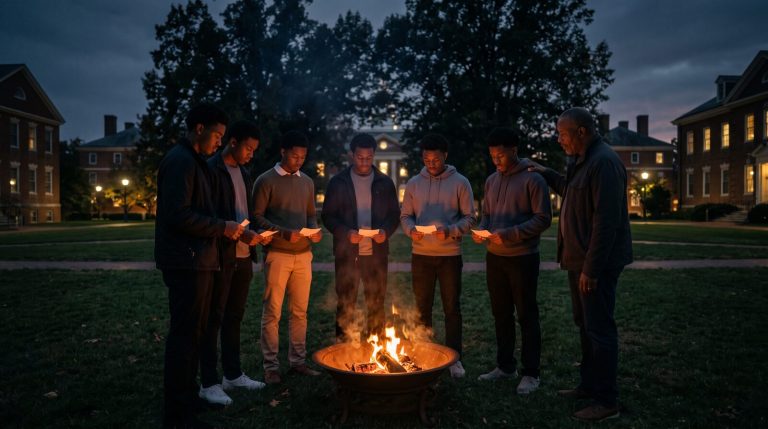
On September 13, incoming freshmen at Howard University will write down their fears and burn them in an annual ceremony. It sounds symbolic because it is. But as Capital B News reported on September 8, rituals like that sit inside a bigger and more practical push at HBCUs to keep Black men in college once they arrive, and that push points toward the right answer in a debate that too often turns into a lecture.
For years, the conversation about Black men in college has been framed as a question of motivation. Where did they go? Why won’t they stay? We think that framing is backward. When schools build real support systems, Black men enroll, persist and finish. The gap says less about the young men than about what is waiting for them when they show up.
The Numbers Behind the Black Men in College Debate
The decline is real. An analysis by the American Institute for Boys and Men found that Black male undergraduate enrollment fell about 22 percent across all colleges between 2010 and 2022, and 25 percent at HBCUs. Black men now make up about 26 percent of HBCU students, down from 38 percent in 1976. Federal data line up: according to the National Center for Education Statistics, women’s share of HBCU enrollment rose from 53 percent in 1976 to 64 percent in 2022.
It was not always this way. Inside Higher Ed reported in June that in 1972, 20 percent of Black men ages 18 to 24 were enrolled in college, compared with 16 percent of Black women. By 2021, the figures were 31 percent for men and 42 percent for women. Black women’s gains deserve celebration. The question is why the men’s progress stalled.
The Strongest Case for Skipping College
Here is the argument we hear most, and it is not foolish. College is expensive, loans are heavy, and plenty of young men look at four to six years of tuition and decide a paycheck now is the smarter bet. Some of them are right. Skilled trades and apprenticeships can lead to solid careers, and federal policy is leaning that way. The new Workforce Pell Grant program, which began July 1, lets students with financial need use Pell dollars for approved short term training programs as brief as eight weeks. We have written about paid tech apprenticeships that do not require a degree, and we stand by that advice.
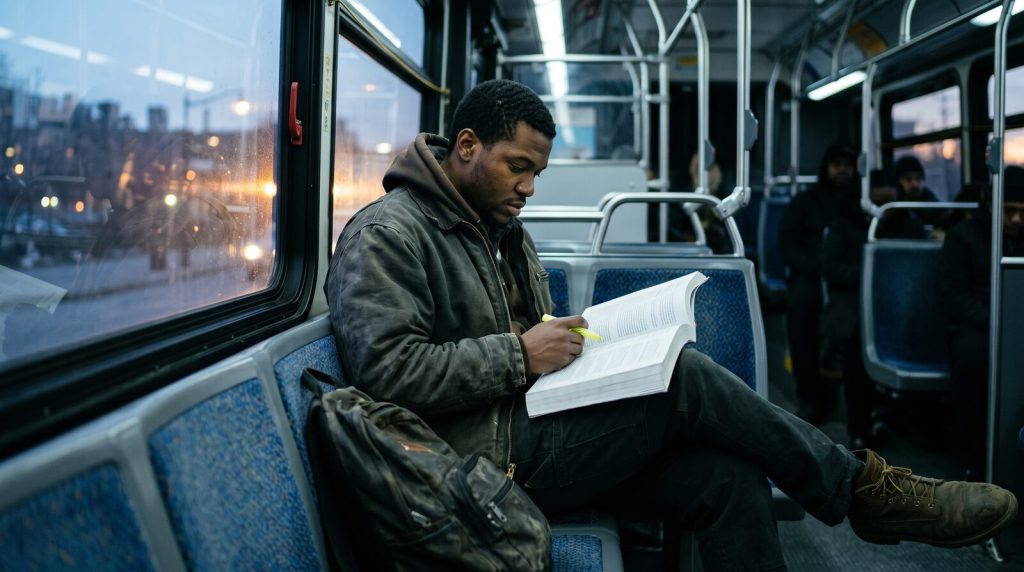
But look at what the numbers say about the worst outcome. According to the Bureau of Labor Statistics, workers whose highest credential was a high school diploma earned a median $966 a week in 2025. Those with some college and no degree earned $1,062. Bachelor’s degree holders earned $1,578. A man who starts college and leaves without finishing often pays the cost of college without collecting most of the payoff. That is the case for support systems. The goal is not to push every young man into a lecture hall. It is to make sure the ones who choose college do not wash out for reasons a school could have fixed.
What Actually Keeps Black Men Enrolled
The programs that work share a few traits. They are structured, they start early, and they are often run by people who have walked the same road as the students. At Benedict College in Columbia, South Carolina, every incoming male freshman is now required to take part in the B.E.S.T. Men initiative, launched this year with a $100,000 grant from Sigma Pi Phi, the oldest Black Greek letter professional fraternity, according to Capital B. Howard runs its own Men of the Mecca initiative to connect men with each other and with campus resources. At Morgan State University, Inside Higher Ed reported that members of the Morgan MILE program carry an average GPA of 3.16, compared with 2.62 campus wide. Selection likely explains part of that gap, since motivated students are more likely to join, but the model is worth copying.
Coaching matters too. The nonprofit InsideTrack’s report on its work with 39 HBCUs from fall 2021 through spring 2026 found an 83.8 percent fall to spring retention rate among the enrolled students it coached. Capital B reported that more than 20 percent of students in the program named finances as a barrier. That detail matters. Many young men do not leave because they stopped caring. They leave because a surprise balance, a family emergency or a work schedule knocked them off track and nobody caught them in time.
These efforts face headwinds. Inside Higher Ed reported that federal anti DEI guidance has pushed many institutions to drop race specific programs, even as courts have blocked parts of that guidance. As we noted in our look at HBCUs booming and squeezed at the same time, these schools cannot count on steady outside support, which makes community backing even more important.
How to Help a Young Man Stay the Course
For Families: Ask Before the First Bill Arrives
When visiting or enrolling, ask three questions. Does the school have a male initiative or mentoring program? Does it offer one on one coaching? Is there an emergency grant fund for students who hit a sudden bill? A school that answers all three with specifics is telling you something about how it treats students who struggle.
For Men Who Stopped Out: There Is a Side Door
Leaving is not the end. Call the registrar and financial aid office to find out exactly what stands between you and re-enrollment, whether a hold, a balance or a missing form. Community college can be a lower cost way back, and our guide to community college to HBCU transfer agreements explains how credits can carry over.
For Alumni, Churches and Fraternities: Fund the Unglamorous Stuff
Sigma Pi Phi’s grant to Benedict is a model. Emergency grants, coaching hours and mentoring programs rarely get buildings named after them, but they are what keep students enrolled. Ask your alma mater or local HBCU what its male initiative needs, then give to that.
For Everyone: Make One Call a Month
You do not need a title to be a mentor. A monthly check in with a nephew, a neighbor or a young man from church, asking how classes are going and what is getting in the way, can surface a problem while it is still small enough to fix.
Burning a list of fears on a September night will not keep anyone in school on its own. What comes after the ceremony will: the adviser who calls when a student misses class, the grant that covers a surprise balance, the older man who has been there and says so. Black men are not a problem to be solved. They are students to be supported, and the schools doing it are showing us how.