
The Quick Version
- Keep wearing sunscreen in fall. The AAD says up to 80% of the sun’s UV rays get through clouds. Use broad-spectrum SPF 30 or higher.
- Fighting dark spots? Dermatologists suggest a tinted sunscreen with iron oxide, which helps block the visible light that darkens spots.
- Beat ashy skin: 5 to 10 minute warm showers, pat dry, then a fragrance-free cream or ointment right away.
- Skip mercury skin lighteners. FDA says check labels for mercurous chloride, calomel, mercurio or mercury.
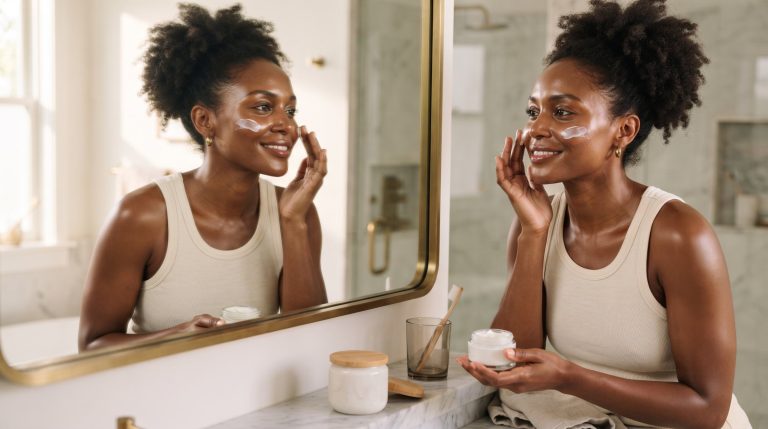
Cooler mornings, indoor heat and drier air are here, and melanin-rich skin tends to announce it fast: ash on the shins, tight cheeks, rough knuckles, flaky scalp and chapped lips. A good fall skin care routine does not need ten steps or a big budget. It needs a few dermatologist-backed habits done consistently.
There is also real news in sunscreen this year. On June 9, 2026, the FDA added bemotrizinol to the list of permitted sunscreen ingredients, the first new active ingredient added since the late 1990s. It protects against both UVA and UVB rays and has been used in Europe for years. The FDA announcement did not say when products will reach shelves, so check labels as new formulas arrive.
Why fall skin care looks different on melanin-rich skin
Dry skin on darker skin tones often shows up as that familiar gray, ashy look. The American Academy of Dermatology’s guide to dry skin remedies for darker skin tones includes a detail many of us were not raised on: for very dry skin, an ointment like petroleum jelly works best, because butters and oils tend to liquefy on the skin and are less effective as moisturizers.
Dark spots are the other fall frustration. Hyperpigmentation left behind by acne, irritation or other skin conditions can linger, and the AAD says a spot a few shades darker than your skin tone usually fades within 6 to 12 months, while deeper discoloration can take years. That is why prevention, meaning sun protection and gentle care, matters so much.
Your fall skin care routine
Screenshot this: a simple fall routine
- Morning: gentle, fragrance-free cleanser, a moisturizer, then tinted sunscreen with iron oxide, SPF 30 or higher.
- Lips: lip balm with SPF 30 or higher during the day, a thick balm or petroleum jelly at night.
- Night: gentle cleanse, a dark spot treatment if you use one, then moisturizer.
- Shower: 5 to 10 minutes in warm water. Pat dry, leave skin a little damp and moisturize right away.
- Hands: fragrance-free hand cream after every wash.
- Home: run a humidifier, especially in the bedroom.
These steps draw on the AAD’s top tips for relieving dry skin, which also recommends creams or ointments over lotions and ingredients like glycerin, hyaluronic acid and petrolatum. For darker skin, the AAD points to moisturizers with ceramides, which help seal in moisture. Loose, breathable cotton clothes help too.
Sunscreen is a year-round habit
“I don’t burn” is not a sun plan. The AAD’s sunscreen guidance says anyone can get skin cancer, regardless of skin tone, and the sun gives off harmful UV rays year-round. Its recommendations:
- Broad-spectrum protection, SPF 30 or higher and water resistance
- About 1 ounce for exposed skin, and at least 1 teaspoon for your face
- Reapply about every two hours outdoors, or after swimming or sweating
For people with darker skin, the AAD specifically suggests a tinted sunscreen with iron oxide, which helps prevent both skin cancer and hyperpigmentation. The same page notes that skin cancer in darker skin is often advanced by the time it is diagnosed, and it can appear on the palms, soles, fingers, toes, nails and inside the mouth. Give those spots a look when you moisturize. Heading somewhere sunny? Pack it for any of our fall getaways too.
Hyperpigmentation care that respects your skin
The AAD lists several ingredients that can help fade dark spots on darker skin tones:
- Azelaic acid
- Glycolic acid
- Kojic acid
- A retinoid, such as retinol or adapalene gel
- Vitamin C
Pick one, give it time and, as the AAD advises, stop using anything that burns or stings. Retinoids can add dryness in cooler months, so ease in slowly.
What to avoid matters just as much. The AAD warns against products with hidden steroids or mercury, which can thin the skin or leave it permanently discolored. The FDA warns that mercury often turns up in skin lighteners and anti-aging creams, especially products without English labels or ingredient lists, and sometimes sold through shops, social media and apps. Check labels for mercurous chloride, calomel, mercuric, mercurio or mercury.
Ashy skin, scalp and lips
Ashy skin. Short warm showers, a pat dry and moisturizer within minutes do most of the work. The AAD also suggests avoiding deodorant soaps and products with alcohol or fragrance. Reapply cream or ointment through the day on problem spots like elbows, knees and shins.
Scalp. The AAD’s hair care tips for Black hair suggest washing once a week or every other week to prevent buildup, using conditioner every time and trying a hot oil treatment twice a month. Keep braids, cornrows and weaves comfortable, because as the AAD puts it, “Pain equals damage.” Flakes and itch that do not improve with good care are worth showing to a dermatologist.
Lips. The AAD’s tips for dry, chapped lips say to skip balms with camphor, menthol, phenol, salicylic acid or flavoring, and look for petrolatum, mineral oil, ceramides or shea butter. Use SPF 30 or higher outdoors, stop licking and picking, and expect noticeable improvement in 2 to 3 weeks.
Black dermatologists and Black-founded brands worth knowing
Dr. Susan C. Taylor founded the Skin of Color Society in 2004. A University of Pennsylvania dermatologist, she served as the 84th president of the American Academy of Dermatology from March 2025 to March 2026, the first person of African American descent in that role, according to Penn Medicine. The society’s Find a Doctor directory lets you search for dermatologists by location and by specialties like acne in skin of color, keloids and vitiligo.
Dr. Achiamah Osei-Tutu, a board-certified dermatologist in New York, founded the Black Derm Directory to help people of African descent find dermatologists who understand their skin. The site notes that 3% of U.S. dermatologists are of African descent, which is why directories like this help.
Two Black-founded brands with products made for melanin-rich skin (no paid placement, just brands worth knowing):
- Black Girl Sunscreen, founded by Shontay Lundy in 2016, describes itself as a Black-owned sunscreen brand made “by us, for us.”
- Buttah Skin, founded by Dorion Renaud, calls itself proudly Black-founded, and its lineup includes a tinted mineral sunscreen.
Whatever you try, patch test new products on a small area first. Want more ways to shop with purpose? See our roundup of Black business wins and how to support them.
If dryness does not improve after a few weeks of consistent care, or a spot changes, bleeds or will not heal, see a board-certified dermatologist, ideally one experienced with skin of color.