

The Quick Version
- Black adults face glaucoma at rates up to six times higher than white adults, and it often causes no symptoms until vision is already lost.
- A comprehensive dilated eye exam is the only reliable way to catch glaucoma early, and many communities offer free or low cost screening options.
Glaucoma rarely announces itself. It has no early symptoms, no pain, and no obvious warning signs, which is exactly why eye doctors call it the silent thief of sight. For Black adults, the stakes are especially high. Research from the National Eye Institute shows Black Americans develop glaucoma at rates up to six times higher than white Americans, tend to develop it at younger ages, and are more likely to experience vision loss and blindness from the disease.
What Glaucoma Actually Does
Glaucoma is not one disease but a group of conditions that damage the optic nerve, usually as a result of elevated pressure inside the eye. That damage tends to start at the edges of a person’s vision, which is part of why it goes unnoticed for so long. Most people do not realize anything is wrong until the disease has already progressed and destroyed a significant portion of their peripheral vision. Left untreated, glaucoma can lead to permanent blindness, and vision already lost to the disease cannot be restored.
Why the Risk Is Higher in Black Communities
Researchers have not identified a single cause for the racial gap in glaucoma rates. Genetics appear to play a role, and studies have identified specific gene variants more common among people of West African descent that are associated with higher risk. Structural differences in eye anatomy, including thinner corneas on average, may also affect how the disease develops and how accurately eye pressure is measured in a standard exam. On top of biological factors, unequal access to regular eye care means the disease is often caught later in Black patients, after more damage has already occurred.
Why Regular Eye Exams Matter So Much
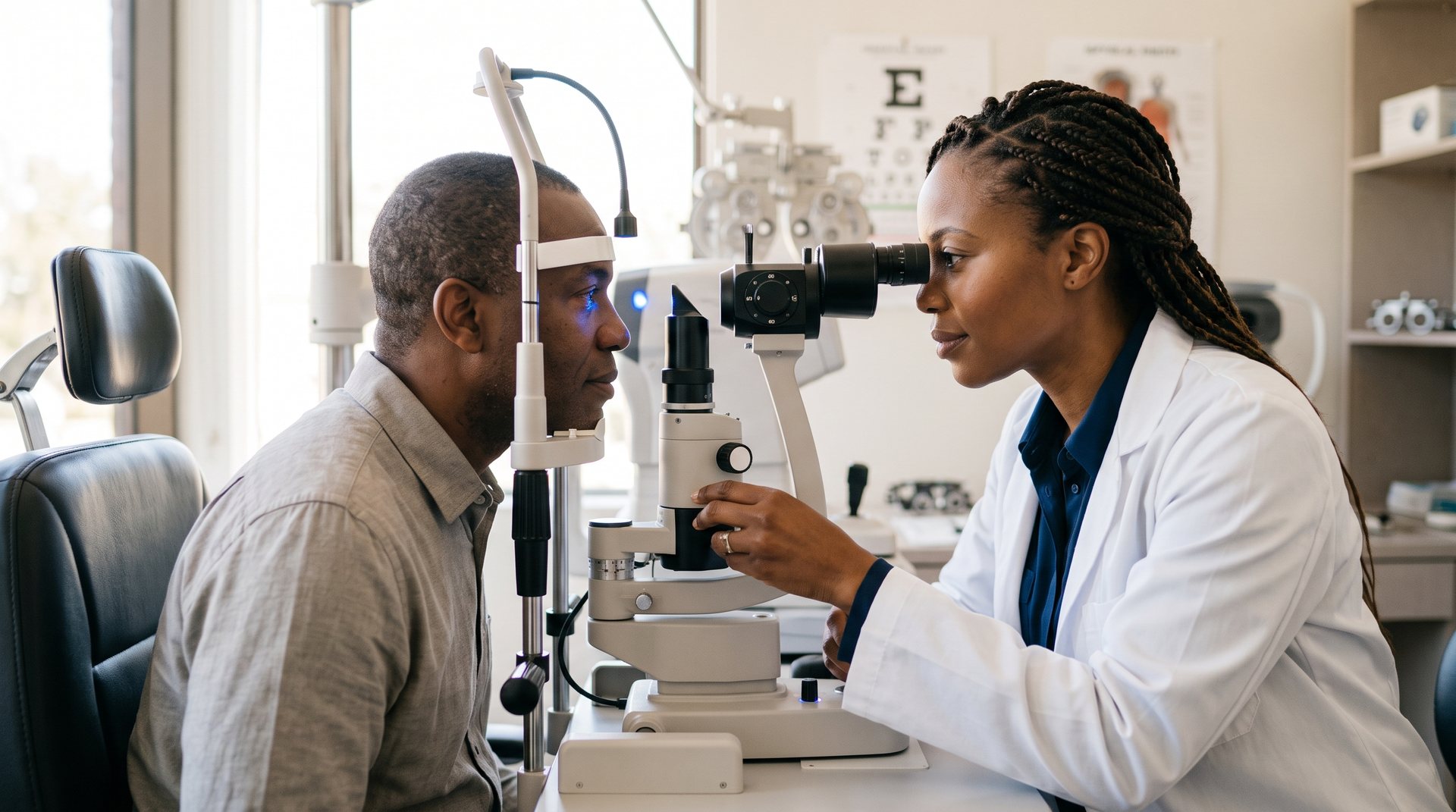
Because glaucoma causes no early symptoms, a comprehensive dilated eye exam is the only reliable way to catch it before vision loss begins. This exam is different from the basic vision screening you might get at a pharmacy or during a routine physical. It involves an eye doctor examining the optic nerve directly, measuring eye pressure, and often taking images of the back of the eye to track subtle changes over time.
Who Should Get Screened, and How Often
- The American Academy of Ophthalmology recommends Black adults get a comprehensive eye exam starting at age 40, roughly a decade earlier than the general recommendation for people without other risk factors.
- Anyone with a parent or sibling who has glaucoma should talk to a doctor about starting screening even earlier.
- People already diagnosed with glaucoma typically need exams every six to twelve months to monitor whether treatment is keeping eye pressure controlled.
Treatment Can Preserve the Vision You Have
The good news is that glaucoma is highly treatable when caught early. Prescription eye drops, laser procedures, and surgery can all lower eye pressure and slow or stop further damage. None of these treatments reverse vision already lost, which is exactly why early detection carries so much weight. Talk to your doctor about which treatment approach fits your specific diagnosis and how consistently you will need to use it, since skipping prescribed eye drops is one of the most common reasons treatment fails to protect vision over time.
Where to Get an Affordable Eye Exam
Cost and access are real barriers, particularly for people without vision insurance. EyeCare America, a public service program run by the American Academy of Ophthalmology, connects eligible seniors and people with certain risk factors to volunteer ophthalmologists who provide exams at no out of pocket cost. Community health centers, university optometry schools, and local health departments frequently offer low cost or sliding scale eye exams as well. The National Eye Institute maintains a list of low cost vision care resources by state for anyone unsure where to start.
A comprehensive eye exam takes less than an hour and could be the difference between catching glaucoma while it is still manageable and losing vision that cannot be recovered. If it has been more than a year or two since your last dilated exam, put scheduling one on this month’s to do list.