
The Quick Version
- Hispanic Heritage Month ends Oct. 15, and Afro-Latino history is a big part of it: about 6 million U.S. adults identify as Afro-Latino.
- Three names to know first: Arturo Schomburg, who built Harlem’s great Black library; Celia Cruz, the first Afro-Latina on a U.S. quarter; and Roberto Clemente.
- Mofongo started with West African fufu, and Puerto Rican bomba grew out of the music of enslaved Africans. The food and the rhythm are Black history too.
- Screenshot the Start Here list below: four books, two picks to watch, a listening list and three dishes to try this week.
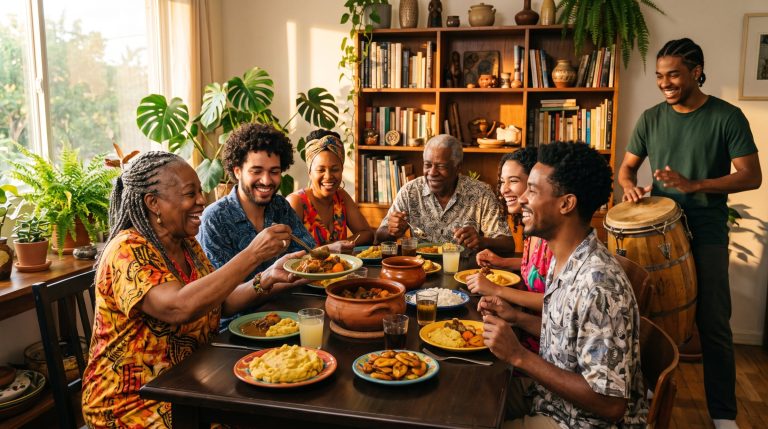
Hispanic Heritage Month wraps up on Oct. 15, and if your feed has been full of salsa clips and sancocho recipes, here is the part that often gets skipped: so much of what the world loves about Latin culture has African roots. Afro-Latino heritage is Black heritage. It lives in the drums of Puerto Rican bomba, in a plate of mofongo, in the voice of Celia Cruz and in the library Arturo Schomburg built in Harlem.
This guide is a starting point, not the final word. Save the Start Here list below, send it to the group chat, and pick one thing to read, watch, cook or play this week.
Why Afro-Latino heritage matters to all of us
Afro-Latinos are not a small niche. About 6 million U.S. adults identify as Afro-Latino, roughly 12% of Latino adults, according to Pew Research Center. Pew also found that about one in seven Afro-Latinos do not identify as Hispanic or Latino at all, which shows how often this identity falls between the boxes on a form.
The history runs deep. In its series Black in Latin America, PBS notes that the region imported more than ten times as many enslaved Africans as the United States, and kept them in bondage far longer. Even in Mexico, where Black history is often overlooked, more than 2.5 million people identified as Afro-Mexican or Afro-descendant in the 2020 census, the first time the census asked the question.
For Black Americans, this is family business. Our ancestors crossed the same ocean. Many of our neighbors, coworkers, church members and cousins are Dominican, Puerto Rican, Panamanian, Cuban, Honduran or Colombian, and plenty of them are Black too.
Figures who shaped history
- Arturo Alfonso Schomburg. Born in Puerto Rico in 1874, the Afro-Puerto Rican scholar spent his life collecting books, manuscripts and art that documented Black contributions to world history. The New York Public Library bought his collection in 1926, and it grew into the Schomburg Center for Research in Black Culture in Harlem.
- Celia Cruz. The Havana-born Queen of Salsa won five Grammy Awards, recorded more than 80 albums and, in 2024, became the first Afro-Latina to appear on a U.S. quarter. Check your change.
- Roberto Clemente. The Pittsburgh Pirates great reached 3,000 hits in 1972 and died that Dec. 31 on a relief flight to earthquake victims in Nicaragua. In 1973 he was elected to the Baseball Hall of Fame in a special election that waived the usual five-year wait. Historians describe his deep pride as a Black Puerto Rican and his fight against the Jim Crow segregation he faced at spring training.
- Susana Baca. A key figure in the revival of Afro-Peruvian music, she is a two-time Latin Grammy winner and, in 2011, became Peru’s Minister of Culture.
The legacy is alive on screen and in music today. BlackAmericaWeb’s roundup of Afro-Latino stars is a good place to start: Zoë Saldaña, who is Dominican and Puerto Rican, won the 2025 Oscar for best supporting actress; Jharrel Jerome, of Dominican and Haitian descent, won an Emmy in 2019 for When They See Us; and singer Amara La Negra has spoken out against the colorism darker-skinned Afro-Latinas face.
The food: African roots on the Latin plate
Start with mofongo, Puerto Rico’s beloved mashed plantain dish. Smithsonian Magazine traces it to fufu, the pounded plantain, cassava or yam dish West Africans brought to the island. Over time, Taíno and Spanish flavors were stirred in, and mofongo was born. If you grew up on fufu, you already know the family resemblance.
TheGrio’s September roundup of Latin American foods shaped by African influence gives you more to try:
- Mangú (Dominican Republic): mashed plantains, tied to the boiling and mashing techniques enslaved Africans carried to the Caribbean.
- Tacu tacu (Peru): a rice and bean dish that grew out of the cooking of Afro-Peruvian families on coastal farms.
- Tapado (Central America): a traditional part of Garifuna cuisine, which blends African and Caribbean traditions.
- Sancocho (across the region): the hearty stew whose techniques and ingredients carry African roots.
The music: where the rhythm comes from
Bomba is where many people start. According to Smithsonian Folkways, it grew from musical traditions brought by enslaved Africans in the 17th century, its songs carried anger and sorrow and even helped spark uprisings, and it has sixteen distinct rhythms. Its cousin, plena, has been called the newspaper of the people because its songs tell the news of the day.
In Central America, the Garifuna people of Honduras, Guatemala, Nicaragua and Belize carry music that brings together African and Indigenous Caribbean elements. UNESCO recognizes Garifuna language, dance and music as intangible cultural heritage of humanity. And salsa, carried around the world by voices like Celia Cruz, stands on Afro-Cuban rhythm.
Your Afro-Latino heritage start here list
Afro-Latino heritage: Start Here (save this)
Read
- The Afro-Latin@ Reader: History and Culture in the United States, edited by Miriam Jiménez Román and Juan Flores. Essays, memoir, poetry and interviews in one book.
- The Poet X by Elizabeth Acevedo, the 2018 National Book Award winner for young people’s literature, about a Dominican American teen in Harlem who finds her voice in slam poetry.
- Schomburg: The Man Who Built a Library by Carole Boston Weatherford, illustrated by Eric Velasquez. A picture book biography for young readers.
- A Woman of Endurance by Dahlma Llanos-Figueroa, a novel about Pola, an African woman enslaved in 19th-century Puerto Rico, and the community that helps her heal.
Watch
- Black in Latin America, Henry Louis Gates Jr.’s PBS series visiting the Dominican Republic, Haiti, Cuba, Brazil, Mexico and Peru.
- Afro-Latinx Revolution: Puerto Rico, journalist Natasha S. Alford’s documentary about Afro-Puerto Rican identity, filmed in Loíza.
Listen
- Celia Cruz, for salsa at its most joyful.
- Susana Baca, for Afro-Peruvian song.
- Los Pleneros de la 21, for bomba and plena.
- Any Garifuna drum ensemble you can find live or online.
Cook
- Mofongo, mangú and sancocho. Make one this weekend and tell the story behind it at the table.
How to celebrate before Oct. 15 (and all year)
- Visit the Schomburg Center. If you’re in New York, the Harlem research center that grew from Schomburg’s collection is a pilgrimage every Black family should make.
- Buy from Afro-Latino-owned businesses. Restaurants, bakeries, bookstores and salons in your city count. Our Black business wins roundup has simple ways to show support that lasts past one month.
- Travel with intention. Loíza in Puerto Rico and the Garifuna communities of Honduras and Belize both tell this story. Start planning with our Black travel guide for fall and winter.
- Keep the calendar full. Our October Black culture calendar has more dates to save once Hispanic Heritage Month ends.
- Ask your elders. Many Black American families have Caribbean and Latin American branches. A phone call to the oldest person you know might turn up a story worth saving.
Afro-Latino history does not belong in a footnote, and it does not end on Oct. 15. Start with one book, one song or one plate, and pass the list along. That is how heritage stays alive: somebody shares it.