
The Quick Version
- Plan one trip in the next year that feeds your spirit, whether it is a roots trip, a group getaway or a weekend drive to a Black heritage site.
- Black leisure travelers spent $145 billion in 2023, according to MMGY Travel Intelligence research, and nearly half belong to Black travel groups.
- Travel is joy, an investment in experience and a way to reconnect with the diaspora, not a way to run from home.
- Safety is real, so research your destination and enroll in the free State Department STEP program before international trips.
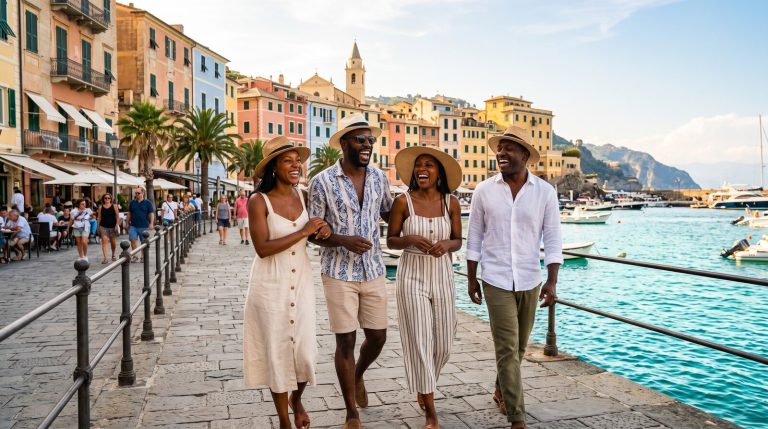
Somewhere right now, a group chat is planning a birthday trip to Accra, a family reunion is booking a block of rooms in Savannah, and a woman who never had a passport until her forties is choosing a window seat. The Black travel boom is one of the most joyful stories in our community, and it is often told wrong. The easy framing says we travel to escape: the news, the job, the country. I think that sells us short. When we travel, we are practicing freedom.
The Numbers Behind the Black Travel Boom
Start with the scale. In research released with the Black Travel Alliance and the National Coalition of Black Meeting Professionals, MMGY Travel Intelligence found that Black leisure travelers spent $145 billion in 2023 across more than 184 million trips. The same study found that 46 percent of Black travelers belong to Black travel groups, that 87 percent are willing to pay for upgrades, and that travelers expected to spend an average of $2,992 each on leisure travel in 2025, about $1,300 more than the year before.
Jason Dunn of the National Coalition of Black Meeting Professionals put it plainly in the release: “Black people do travel, and our buying power does impact communities.” That line should be printed on every tourism board’s wall.
The appetite shows up in where we go. A July roundup from TheGrio of destinations Black travelers love ranged from Atlanta, New Orleans and Martha’s Vineyard to Ghana, Brazil, Morocco and Japan, with travelers seeking diaspora connection, Black-owned businesses and heritage experiences.
Joy Is Not a Luxury
For generations, Black travel in America was an exercise in risk management. Victor Hugo Green, a Harlem postal worker, created The Negro Motorist Green Book, published from 1936 to 1966, so Black families could find gas stations, hotels and restaurants that would serve them. You can still page through the originals in the New York Public Library’s digital collection. Green wrote that “there will be a day sometime in the near future when this guide will not have to be published. That is when we as a race will have equal opportunities.”
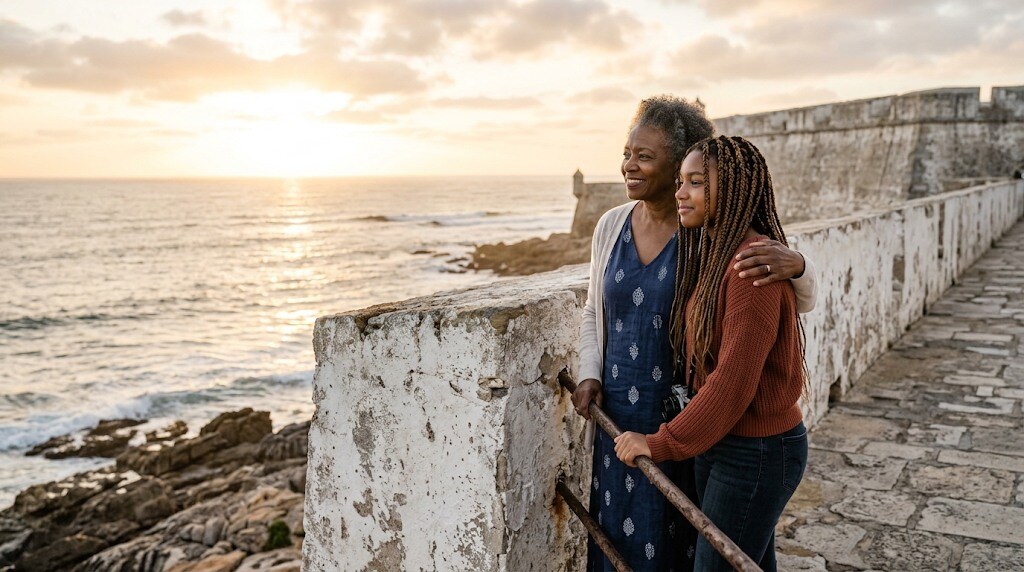
We are not fully in that day. But every time a Black grandmother sips coffee on a balcony in Lisbon, or a group of line brothers takes over a beach in Negril, we move a little closer to the world Green imagined. Our ancestors traveled to survive. We get to travel to delight. That is not frivolous. It is a form of inheritance.
Experience Is a Kind of Wealth
We talk a lot, rightly, about building financial wealth. We should talk as much about the wealth of experience. A child who has seen a Black-run city abroad carries a different sense of what is possible. An adult who has navigated a new language, a new currency and a new transit map comes home with confidence that shows up at work and in business.
Remote and hybrid work have opened this door wider. In a 2021 Future Forum survey, 97 percent of Black knowledge workers who were working remotely wanted a hybrid or fully remote setup, compared with 79 percent of white knowledge workers. Only 3 percent wanted to return to the office full time. Flexibility means a work week can include a week in Salvador da Bahia. It means the “someday” trip can become a “this spring” trip.
And building experience does not require a first-class ticket. A road trip along the Gullah Geechee Cultural Heritage Corridor can teach your children more about who they are than a week at any resort.
Going Home to Places We Have Never Been
The most moving part of the Black travel boom is the return. Ghana’s Year of Return in 2019 marked 400 years since enslaved Africans arrived in Virginia in 1619, and Forbes reported it drew about 750,000 foreign visitors by December of that year. People walked through the doors of the slave castles on the coast and came out changed.
That hunger has only grown. Ancestry travel is one of the top travel trends of 2026, and BCN’s guide to planning an ancestry trip can help you start. Standing on the ground your people came from is not escape. It is arrival.
We Travel Better Together
Black travel is also a story of community building. Evita Robinson founded Nomadness Travel Tribe in September 2011, and the community now counts more than 30,000 members. In June 2020, Black travel creators formed the Black Travel Alliance to push the industry toward real representation, from marketing budgets to the executive suite. Group trips, travel clubs and sorority getaways have turned “I have never been” into “we are going.”
Yes, Safety Matters. It Is Not the Whole Story
None of this ignores reality. MMGY found that 79 percent of Black travelers say safety and a welcoming atmosphere strongly influence where they go. In 2023, the NAACP issued a travel advisory for Florida over state policies on Black history education. Abroad, colorism and curiosity can show up in uncomfortable ways.
So travel smart. Read the State Department’s guidance on race and ethnicity travel safety, enroll in the free Smart Traveler Enrollment Program for embassy alerts, and seek out Black creators and travelers who have been where you are going. Then go anyway. Fear has kept us home long enough.
Where the Money Goes Matters Too
If Black travelers are a $145 billion market, we have leverage. Book Black-owned tours, stay in Black-owned rentals, eat at Black-owned restaurants and tip the local guide who tells the history right. Our spending can lift the communities we visit, here and across the diaspora.
So here is my ask. Pick one trip for the next 12 months that feeds your spirit, not just your feed. Invite someone who has never had a passport. Send this column to the friend who keeps saying “one day.” The world has always been ours to see. Let us go see it.