
The Quick Version
- In Philadelphia, a brunch cafe run by historic Tindley Temple helps fund a soup kitchen that now serves neighbors twice a week. Eating there is a direct way to support it.
- The Black Church Food Security Network connects nearly 300 congregations with Black farmers, gardens and church farmers markets, and it keeps a waitlist for churches that want to join.
- Word In Black hosts a virtual conversation on Black food and farming on Wednesday, September 16, at 6 p.m. ET.
- If your household needs food now, a food bank locator and the 211 help line are listed at the end.
Feeding neighbors has long been part of Black church life. What is changing is how. On September 3, Word In Black launched its first special issue devoted entirely to food, and two of its stories show Black churches fighting hunger in ways that go well beyond the canned food drive: a Philadelphia congregation running a brunch cafe to keep its soup kitchen open, and a Baltimore pastor who turned one church garden into a national network tied to Black farmers.
Both models are practical, both can be supported from wherever you are, and both carry a lesson for any congregation sitting on a kitchen, a parking lot or a patch of land. Here is how they work and how to plug in.
A Brunch Cafe That Keeps a Soup Kitchen Running
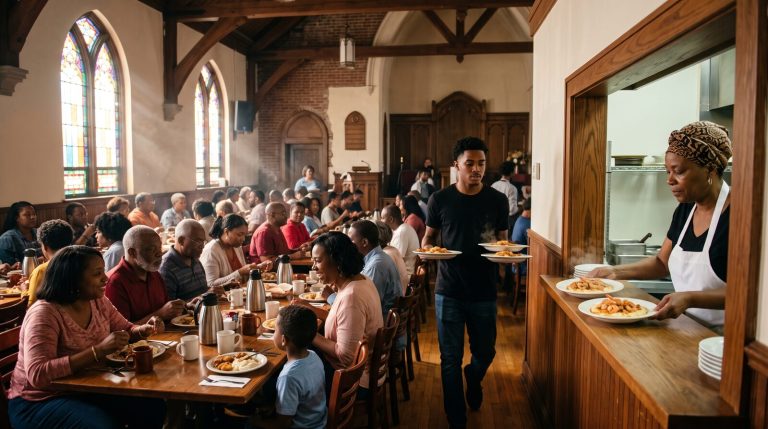
Tindley Temple United Methodist Church on South Broad Street has fed people since the 1920s, when its namesake, the Rev. Charles Albert Tindley, ran a soup kitchen there. That ministry kept going until the pandemic shut it down. When the church tried to restart, it hit a wall: repairing its refrigeration equipment would cost $78,000, according to a profile from the church’s regional United Methodist conference.
So the congregation got creative. Pastor John Brice and his wife, Ebony, turned an underused Sunday school space into the Tindley Tea Cafe, serving dishes like shrimp and grits and chicken and waffles, as 6abc Philadelphia reported. Brice has described the cafe plainly as the church’s “tool for doing ministry.”
It is working. Word In Black’s September 3 report on the cafe says profits now fund a soup kitchen that serves dozens of people on Tuesday and Thursday evenings. A partnership with Carversville Farm brings weekly deliveries of produce and meat, and volunteers sign up online to cook and serve. The church’s leadership told the outlet they chose food insecurity as the need they would commit to each month. The congregation has also finished the Charles Albert Tindley Legacy Preservation Center, which is set to open this fall to house church archives and tell Tindley’s story.
The Plant Pastor Behind a National Network
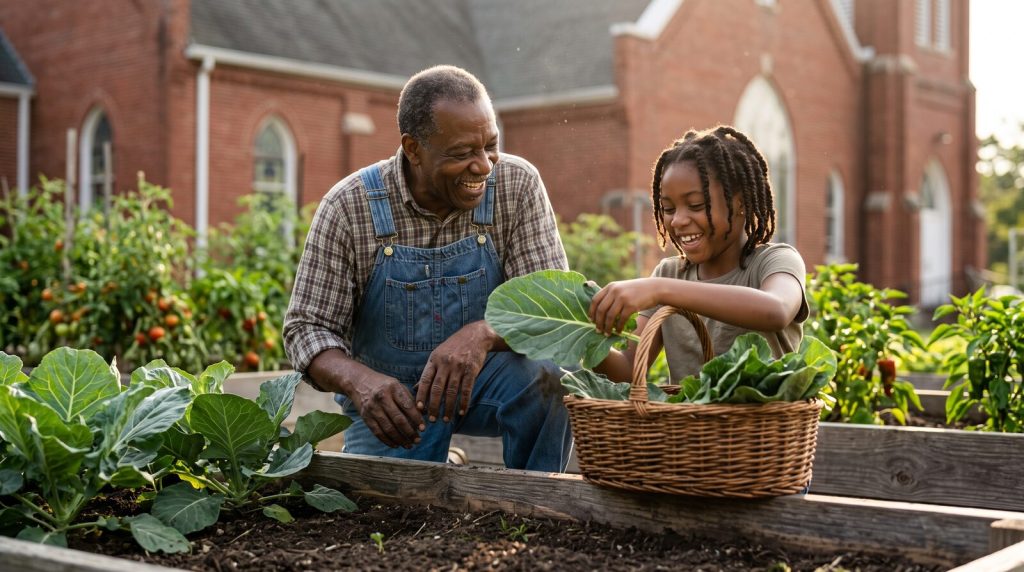
In Baltimore, the Rev. Dr. Heber Brown III started smaller: a garden at Pleasant Hope Baptist Church. According to a Deseret News profile of the network’s origins, Brown kept watching church members cycle in and out of hospitals with diet related illnesses, and he wanted to break the pattern. The 1,500 square foot garden grew about 1,200 pounds of produce a year, from collard greens to peaches, for members and neighbors.
In 2015, Brown built on that garden to found the Black Church Food Security Network. Its about page now counts nearly 300 Black congregations, from Omaha, Nebraska, to the East Coast and the Southeast. Member churches plant gardens, host small farmers markets and set up Black Church Supported Agriculture, where congregants pay Black farmers ahead of time for regular produce. Deseret News describes one example: members of Ebenezer Baptist Church buying weekly deliveries from Bread and Butter Farms in Georgia.
What stands out is the philosophy. The network says outright that it is not a direct service or food charity organization. The goal is ownership: Black churches and Black farmers building local food systems together, so communities are not waiting on someone else’s supply chain. Brown told Word In Black that he once assumed denominational leadership was the path, then learned the real energy lived in local congregations.
Why Black Churches Fighting Hunger Matters Right Now
The need is not abstract. In 2023, 22 percent of Black people in the United States experienced food insecurity, more than twice the rate for white people, and 27 percent of Black children lived in food insecure households, according to Feeding America’s analysis of USDA data. Tindley’s pastor has heard it from people with jobs who still can’t cover the mortgage and dinner every night.
The national picture is also getting harder to see. In September 2025, the USDA announced it was ending its annual Household Food Security reports, calling them redundant and politicized. When federal tracking goes quiet, the people who know which families are going without are often the ones handing out plates on Tuesday night. That makes church food ministries more than charity. They are frontline knowledge.
This work also connects to the access gaps BCN has covered in food deserts and Black neighborhoods, and to the long fight covered in our piece on how Black farmers are still waiting on justice. A church that buys from Black farmers is addressing both at once.
How to Help, or Get Help
Eat With Purpose
If you are in or visiting Philadelphia, have brunch at the Tindley Tea Cafe, 762 South Broad Street. Hours have changed as the cafe has grown, so check its social media pages before you go.
Give Your Time
Tindley recruits soup kitchen volunteers online. Closer to home, call the churches in your area and ask whether they run a pantry, meal ministry or garden that needs hands. The Black Church Food Security Network also accepts volunteers and donations through its website.
Bring the Model to Your Congregation
If you serve on a church board, start with an honest inventory: land, kitchen space, parking lot, members who farm or cook. The network’s membership program is being rebuilt, and congregations can join a waitlist through its membership form. Ask your church to buy produce from a Black farmer for its next fellowship meal.
Join the Conversation
Word In Black’s “What’s on Your Plate” virtual event runs Wednesday, September 16, from 6 to 7:15 p.m. ET, with farmers and food leaders including Christa Barfield of FarmerJawn and Tambra Stevenson of WANDA.
If Your Family Needs Food Now
Use Feeding America’s food bank locator by ZIP code, or dial 211, a United Way service that makes confidential referrals to local food, housing and utility help.
A brunch cafe and a church garden will not end hunger on their own. They do show what happens when a congregation stops waiting and uses what it already has. Every church has something. The question is whether it is being put to work.